
How Salk And Sabin Helped Create The Modern Clinical Trial

By John Oncea, Chief Editor, Clinical Tech Leader
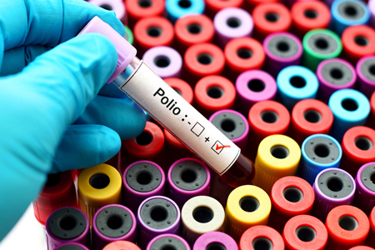
How Jonas Salk and Albert Sabin pioneered double-blind methodology, HeLa cell assays, and IBM data processing – innovations that became the global standard for clinical trials.
Located in Copenhagen, right next to Tivoli Gardens, the second-oldest amusement park in the world, and only a 5-minute walk from City Hall Square, sits Ny Carlsberg Glyptotek, the leading antiquities museum in the Nordic countries. “The museum and its buildings,” Glyptotek notes, “have a unique history, which through its founder, brewer Carl Jacobsen, unites art history with industrial history and stands as an important chapter in Danish cultural history around the year 1900.”
The museum houses numerous exhibitions, from Greek and Roman sculpture to French and Danish art. Glyptotek also maintains a permanent Egyptian collection that includes artifacts from Ramses II, Tutankhamun, Akhenaten, and Nefertiti, as well as mummies in the basement.
Included amongst its more than 300 Egyptian works is item AEIN 134, the Stele of Ruma the Doorkeeper, which has been dated to the New Kingdom, 18th Dynasty, ca. 1403-1365 BCE. Better known as the Polio Stele, the limestone tablet depicts a figure identified as Ruma, a priest or doorkeeper dedicated to the goddess Astarte. According to Egypt Museum.
Ruma is portrayed with a walking stick and a withered leg, something uncommon in Egyptian artwork. “The Egyptians (rarely) depicted illness. This instance is one of the exceptions. One of (Ruma)’s legs is withered, and the foot only supports itself on the toes. It is the opinion of (many) doctors that these deformities are due to polio. This may be the world’s oldest representation of that disease.”
The next known reference to polio came nearly 3,200 years later, in 1789 CE, when British physician Dr. Michael Underwood attempted the first-known clinical description of polio called “debility of the lower extremities,” according to The Global Polio Eradication Initiative. Forty years later, in Germany, Dr. Jakob von Heine led the initial systematic investigation of polio and theorized that it could be contagious.
The Race For A Cure
Von Heine was right, and in 1894, the U.S. witnessed a significant outbreak of what was then called infantile paralysis, which has since become identified as the first cases of polio. Twenty years later, a New York City polio epidemic heightened concern on both sides of the Atlantic and accelerated research into how the disease is spread.
Type 1, Type 2, and Type 3 strains of polio virus were identified by Macfarlane Burnet and Dame Jean MacNamara in 1931, and, in 1938, the precursor to the March of Dimes, the National Foundation for Infantile Paralysis, was established as a fundraising organization focusing on polio research.*
In 1948, a breakthrough quietly changed everything. Three scientists – John Enders, Thomas Weller, and Frederick Robbins – succeeded in growing live poliomyelitis viruses in human cells in a laboratory dish. Six years later, they would accept the Nobel Prize for their work. Still, their discovery didn’t make headlines on its own, but it unlocked a door that had been sealed shut for decades, and, within a few years, Jonas Salk had walked through that door.
According to the Salk Institute for Biological Studies, built on the trio’s discovery by creating an injectable vaccine made from killed virus, the first real weapon the world had ever held against polio. “When the announcement came in Ann Arbor, MI, on April 12, 1955, that the vaccine was both safe and effective, celebrations erupted across the nation. It was a day many compared to V-E Day or V-J Day, signaling victory in a battle against a relentless enemy,” writes the Salk Institute.**
While Salk’s vaccine was being celebrated, the cold, hard reality was administrating it required a needle, a trained hand, and a supply chain, making it a logistics nightmare. Fortunately, Albert Sabin had another idea.
By 1961, Sabin had developed an alternative – an oral vaccine in the form of a few drops on a sugar cube that was cheaper, easier to deliver, and spread immunity in ways a shot never could. According to the National Center for Biotechnology Information (NCBI), Sabin “tested it on 10,000 monkeys and 160 chimpanzees, as well as on himself, on his daughters, and on young volunteers recruited from among the inmates of the federal prison of Chillicothe in Ohio.”
Sabin further tested his vaccine in the Soviet Union, administering it to millions of children between 1959 and 1961. “The mass vaccination campaign in the Soviet Union demonstrated high vaccine effectiveness and resulted in licensure of oral polio vaccine (OPV) in the U.S. in 1961,” the NCBI writes. “Subsequently, in the U.S., OPV rapidly replaced inactivated polio vaccine (IPV) during the 1960s as the vaccine of choice.
“OPV was preferred over IPV because it induced both systemic and intestinal immunity, was easier to administer, and was less expensive than IPV. The main drawback of OPV is that, very rarely (in 1 case out of ≈750,000), Sabin viruses can mutate back to a more neurovirulent form and cause vaccine-associated paralytic polio.”
Still, the disease persisted in the developing world. A 1970’s lameness survey, according to Our World in Data, revealed what many had suspected: polio was everywhere. In response, the World Health Assembly created the Expanded Programme on Immunization (EPI) in 1974, beginning the long work of reaching children in every corner of the earth.
At its inception, EPI focused on protecting all children against six childhood illnesses, including polio. Today, that number has grown to 13 universally recommended vaccines across the life course, and 17 additional vaccines with context-dependent recommendations. And, as we’ll see in the next section, EPI worked with other organizations to reduce occurrences of polio by more than 99%.
* In 1951, the March of Dimes would give Salk $200,000 a year for his research, according to the NCBI.
** Before the 1955 announcement, Salk’s vaccine underwent rigorous testing in one of the largest clinical trials in history, something to keep in the back of your mind for later.
30 Years Of Public Health Initiatives Nearly Eradicated Polio
By the mid-1980s, the spread of polio had been eliminated in the U.S., and the World Health Organization (WHO) Region of the Americas was certified free of indigenous wild poliovirus in 1994. Six years later, the Western Pacific Region (including Australia and Japan) was declared polio-free, and the WHO European Region was certified free of all three types of wild poliovirus in 2002.
According to WHO, “Wild poliovirus cases have decreased by over 99% since 1988, from an estimated 350,000 cases in more than 125 endemic countries to six reported cases in 2021. Of the three strains of wild poliovirus, wild poliovirus type 2 was eradicated in 1999, and wild poliovirus type 3 was eradicated in 2020. As of 2022, endemic wild poliovirus type 1 remains in two countries: Pakistan and Afghanistan.”
This success is a direct result of numerous, coordinated public health initiatives.
In 1985, Rotary International pledged $120 million to immunize the world’s children against polio, the largest privately led public health effort in history, writes the Global Polio Eradication Initiative. Three years later, with polio still paralyzing more than a thousand children every single day, the World Health Assembly launched The Global Polio Eradication Initiative, drawing in the WHO, UNICEF, the CDC, and eventually the Bill & Melinda Gates Foundation.
The goal was absolute: zero cases, everywhere, permanently.
What followed was one of the great logistical achievements of the twentieth century. Volunteers – more than twenty million in a single year at the initiative’s peak – fanned out across continents carrying coolers of vaccine, negotiating access through conflict zones and remote villages.
The results came quickly at first. In 1991, the last wild case in the Americas was recorded in a three-year-old, Luis Fermin Tenorio, in the highlands of Peru. In 1996, Nelson Mandela launched the “Kick Polio Out of Africa“ campaign, and 420 million African children were vaccinated in a single coordinated push.
But the disease was not finished. In 2003, unfounded rumors in northern Nigeria led to the suspension of vaccination campaigns, and the virus quickly re-exported itself to more than a dozen countries that had previously been free of it. According to the NCBI, it was a devastating demonstration of how years of careful work could be unraveled in months by fear and misinformation. Eventually, the campaigns resumed, and the outbreak was contained, but the episode made clear that trust was as essential as logistics.
The momentum held. India, long considered the hardest case, reported its last wild poliovirus case in 2011, according to The Global Polio Eradication Initiative. Nigeria followed in 2012. South-East Asia was declared polio-free in 2014. By 2016, writes the NCBI, the world had begun phasing out the original oral vaccine, switching to a more targeted formulation targeting only the remaining strains – a sign that the end was finally in sight.
In 1988, roughly 350,000 children were paralyzed by polio every year across more than 125 countries. By the mid-2020s, that number had fallen by more than 99 percent. It is one of the most consequential public health achievements in the history of medicine, accomplished not by a single discovery, but by thirty years of relentless, imperfect, human effort.
How Salk And Sabin’s Clinical Trials Transformed Medicine
In the spring of 1954, more than a million American schoolchildren rolled up their sleeves – or lined up to swallow a few drops of liquid on a sugar cube – and became participants in what was then the largest and most ambitious clinical trial in the history of medicine. They were called the Polio Pioneers, according to the Historical Society of Easton Connecticut, and what happened to them, and because of them, changed not just the fate of one disease but the entire architecture of how medicine proves things work.
The race to defeat polio produced two landmark vaccines and two very different men in Salk and Sabin, but their most enduring contribution was not the vaccines themselves. It was the clinical trial machinery they built to test them – machinery assembled from tools and methods that were, by the standards of their era, genuinely radical.
Neither researcher could have gotten off the ground without Enders’s, Weller’s, and Robbins’s successful growing of live poliovirus in non-nervous human tissue in a laboratory dish five years earlier. Before this breakthrough, the virus could only be cultured in living nerve tissue, something that was dangerous, expensive, and nearly impossible to produce in the quantities a clinical trial would require.
The new tissue culture technique transformed poliovirus from an almost unworkable research subject into something that could be grown, studied, weakened, killed, and eventually injected into children by the millions.
Tissue culture production is not a relic of that era. It remains a cornerstone of how vaccines are manufactured today, used in the production of influenza, polio, and a wide range of other vaccines. What felt like a laboratory curiosity in 1949 became, within a decade, an industrial process, and it has never stopped being one.
Salk And The Trial That Rewrote The Rules
Salk’s vaccine used poliovirus killed with formaldehyde, inactivated so it could no longer cause disease, but still potent enough to prime the immune system. Distribution of the vaccine was managed by five companies, including Cutter Laboratories.
“Thirteen days after the first doses were administered, there were reports of cases of polio in immunized children,” according to NCBI. “All of these initial cases had received vaccine manufactured by one company – Cutter Laboratories (although the vaccine made by Wyeth also caused some cases of polio). In the end, at least 220 000 people were infected with live polio virus in Cutter’s vaccine (including 100,000 contacts of immunized children), 70,000 developed muscle weakness, 164 were severely paralyzed, and 10 died.
It was a catastrophic reminder that the technology of verification – confirming the virus was genuinely dead – was just as critical as the technology of production.
But the more transformative innovation of Salk’s program was not chemical. It was methodological. The 1954 field trial, overseen by epidemiologist Thomas Francis Jr., enrolled 1.8 million children across the U.S. – an organizational undertaking with no precedent in medical history. Thousands of schools, hundreds of thousands of volunteer nurses and administrators, and a nationwide cold chain of refrigerated transport all had to be coordinated simultaneously to keep the vaccine viable and the data clean.
Francis insisted on a design that many of his contemporaries considered unnecessarily rigorous, even morally questionable: a double-blind, placebo-controlled trial. According to the NCBI, 623,972 schoolchildren were injected with a vaccine or placebo, and more than a million others participated as observed controls.
Half of the children in the study group received the vaccine; the other half received an inert saline injection. Neither the children, their parents, nor the physicians administering the shots knew who received which. The blinding was not just a procedural nicety; it was a firewall against the unconscious bias that had distorted medical research for generations, the tendency of doctors to see improvement in patients they wanted to get better.
But proving the vaccine had worked required its own innovative technology. To evaluate whether vaccinated children had developed immunity, Salk needed a way to measure antibody levels in blood samples drawn from 1.8 million children – a scale that made the original method, using rhesus monkey kidney cells, wholly impractical.
The solution came from an unlikely source: HeLa cells, the first immortal human cell line, derived from cervical cancer cells taken from Henrietta Lacks in 1951. According to the University of Michigan School of Public Health, the National Foundation for Infantile Paralysis’s (NFIP) director of research asked Russell W. Brown, director of the Carver Research Foundation at the Tuskegee Institute, to turn its halls into the world’s first HeLa cell factory, with Brown serving as principal investigator and James H.M. Henderson as co-PI.
The technique they enabled was called a serum neutralization assay: blood drawn from a vaccinated child was placed in a dish alongside HeLa cells and a small dose of live poliovirus, according to the NCBI. If the child had developed sufficient antibodies, the virus was neutralized, and the HeLa cells remained healthy and intact. If the cells showed damage, the immunity wasn’t there.
It was a precise, scalable method for confirming protection at a scale no previous technology could have supported – and it was brand new.
The trial required an estimated 20,000 tubes of HeLa cells every week, more than half of which were grown and shipped from Tuskegee. The work of Brown, Henderson, and their team of researchers – Black scientists working in the segregated South, not far from where the infamous Tuskegee syphilis study was simultaneously underway – made it possible to announce results in time for the 1955 polio season.
The data from those 1.8 million children was tabulated using IBM punch card systems, an early form of machine data processing that represented the absolute frontier of information technology in 1954, according to The Bentley Historical Library. There were no computers in any meaningful modern sense. The punch cards fed into mechanical sorters and tabulators that could process data far faster than human clerks, but the work was still largely manual, and the statistical analysis required teams of researchers working for months after the trial concluded.
When Francis announced the vaccine was safe, potent, and effective in April 1955, the reaction was closer to a national celebration than a scientific announcement. Schools let out. Church bells rang. It was the payoff of a methodology that had demanded more patience, more rigor, and more trust than anything medicine had previously asked of the public.
Sabin And The Art Of Taming A Virus
Sabin took a fundamentally different approach, and it required a different kind of innovation entirely, writes the NCBI. Rather than killing the poliovirus, Sabin spent years learning to tame it – to weaken it just enough that it could no longer paralyze, while remaining alive enough to replicate in the gut, trigger immunity, and even spread protectively through communities via normal transmission.
The technique was called serial passage attenuation, where the virus was repeatedly passed through different host cells, generation after generation, selecting strains that lost their virulence while retaining their ability to immunize, according to the NCBI.
This was not technology in the mechanical sense. Rather, it was a technology of biological knowledge – a precise, painstaking manipulation of viral evolution that demanded a deep understanding of how viruses behave, mutate, and adapt. Each passage had to be tested. Each candidate strain had to be evaluated for the risk of reverting to a dangerous form inside a human host. The laboratory work alone took years.
Verifying that the attenuation had held required its own innovative methodology. According to EBSCO Research Starters, the recovered virus from each passage was injected directly into the brain or spinal cord of monkeys to confirm that it no longer damaged the nervous system. These meticulously performed neurovirulence experiments involved approximately 9,000 monkeys and approximately 150 chimpanzees, enabling Sabin to isolate rare mutant polioviruses that would replicate in the intestinal tract but not the nervous system. It was slow, painstaking work, but it produced something no killed-virus vaccine could offer: a strain that behaved predictably inside the human body.
Sabin’s clinical trials presented their own novel challenges. Because the U.S. had already adopted the Salk IPV vaccine by the time Sabin’s OPV was ready for large-scale testing, his major trials were conducted in the Soviet Union and other countries in the late 1950s – an extraordinary moment of scientific cooperation across Cold War lines.
According to NCBI, scientists, specimens, and vaccine vials crossed the Iron Curtain in both directions as cooperation intensified, a collaboration that had the blessing of both the FBI and the State Department despite warnings from the Department of Defense that the materials could be used in making biological weapons. After two intensive FBI interrogations, Sabin traveled to Leningrad and Moscow in June 1956. Within two years, a shipment of his attenuated virus strains arrived in the Soviet Union on dry ice. The trials reached 77 million people in the Soviet Union alone, dwarfing even the scale of Salk’s 1954 effort, though they lacked the same controlled trial design that Francis had insisted upon.
The oral vaccine’s advantages were partly technological and partly logistical. No needles, no trained injectors, no need for a clinical setting. A few drops on a sugar cube could be administered by a community health worker in a jungle village or a refugee camp. The cold chain requirements were simpler. The cost was lower. And because the attenuated virus could spread from vaccinated children to unvaccinated contacts, the oral vaccine could achieve herd immunity in ways that an injectable vaccine simply could not.
Serial passage attenuation remains in active use today, writes ScienceDirect. The vaccines for measles, mumps, rubella, chickenpox, and rotavirus are all live-attenuated vaccines built on the same foundational logic Sabin refined in his polio work.
What They Left Behind
The technologies and methods Salk and Sabin brought to bear on polio – tissue culture production, rigorous double-blind trial design, machine-assisted data processing, serial passage attenuation, cold chain logistics – were not all invented in the 1950s. But they were assembled, stress-tested, and in several cases pushed to entirely new scales of application during the polio vaccine campaigns. What emerged from that process was not just a pair of vaccines but a template for how medicine tests and proves itself.
The randomized, placebo-controlled, double-blind clinical trial is now the universal requirement for drug and vaccine approval worldwide. Every cancer drug, every COVID vaccine, every antibiotic that has been proven safe and effective in the past seventy years has been proven so by a methodology that Francis and Salk demonstrated could work publicly, at national scale, in full view of a terrified and watchful world.
The polio vaccines saved millions of lives. The trials that proved them may have saved millions more.