
Decentralized Trials Promised Less Burden. Did They Deliver?

By John Oncea, Chief Editor, Clinical Tech Leader
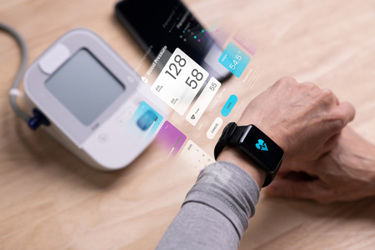
For years, decentralized clinical trials – including the use of wearable devices – have been championed as a way to make patient participation easier. Elisa Cascade, an industry advisor with deep experience in patient engagement and trial technology, has a more skeptical read: whether that promise is fulfilled or not comes down to a single design question most protocols never explicitly answer.
Patients Don’t Experience Clinical Trials, They Experience The Visit Schedule
Before assessing whether new technology helps, Cascade first pointed out how little most patients actually understand about the trials they’re in. Case in point: most people don’t seek out clinical research directly; they learn about a trial from their doctor, often as a last-line therapy, or they find one because their current treatment has stopped working or is causing side effects.
“Patients aren’t aware of clinical trials,” she said. What they do experience – intensely – is what researchers call the schedule of assessments: which tests happen on which visit. That schedule, not the underlying technology stack, is what drives how burdensome a trial feels to the person enrolled in it.
For academic medical centers in particular, that can mean a single visit stretching across six hours and multiple clinics – labs in one building, imaging in another, the physician somewhere else entirely. Cascade compared it to the parable of the boiling frog: patients often don’t register how burdensome the experience has become, because they never had a baseline for what a trial should feel like in the first place.
The Test That Separates Genuine Improvement From A Red Herring
This is where Cascade’s framework for evaluating new patient-facing technology becomes useful. She distinguishes between two very different uses of digital tools in a protocol. In some cases, a wearable or digital measure is itself the intended endpoint; the reason the technology exists is scientific. In other cases, it’s what researchers call a tertiary endpoint: a nice-to-have data point that helps researchers understand a drug’s effect but isn’t tied to a specific claim.
Asked whether adding a wearable device to a study functions as a kind of red herring for patient burden, Cascade didn’t fully agree, but she didn’t fully disagree, either. Her actual test is simpler and more practical: does the technology measure a primary endpoint or eliminate an in-person visit, or does it just add one more thing to the visit that already exists? “If the technology can enable the shift of the visit so that it doesn’t have to be at site, then it’s more meaningful to the patient,” she said.
An at-home respiratory monitoring device that replaces a clinic visit is a genuine improvement; it saves a patient, or a caregiver, a trip and time off work. A watch strapped on in addition to an already-packed visit schedule, purely to generate more exploratory endpoints, may not be.
Complexity Is Compounding, Not Easing, The Burden
Cascade pointed to research from Tufts documenting a steady rise in the number of endpoints and overall complexity built into modern protocols, a trend other industry voices have also flagged as a growing problem. Every additional data point a sponsor adds to a protocol has to be justified against its cost to the patient relationship: the more that gets added, the harder it becomes for a patient to agree to participate in the first place, and the harder it becomes to keep them compliant and retained through the full length of the study. That burden, Cascade noted, “ratchets up the cost” for the entire system, not just the patient experience, but the trial’s odds of completing successfully at all.
Where The Real Opportunity Sits
The takeaway from Cascade’s framework isn’t that decentralized trial technology and wearables are failing patients; it’s that the technology’s impact on burden depends entirely on what it’s designed to replace. Digital tools that shift a visit out of the clinic and into a patient’s home represent genuine burden reduction. Digital tools bolted onto an already-full visit schedule to harvest additional data may represent the opposite, dressed up as innovation.
For sponsors serious about improving recruitment and retention – and, as Cascade noted, digital tools may move the needle on retention more than recruitment – the design question to ask before adding any new technology isn’t “what cool things can this measure?” It’s “is this needed for a study endpoint, and if not, what does this replace?”