
Forget More Clinical Tech, We Need More Adoption
By Dan Schell, Chief Editor, Clinical Leader
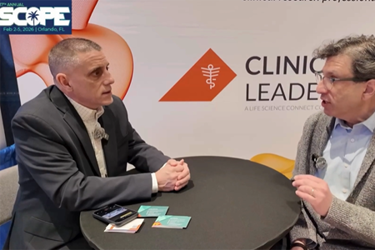
Dan Schell (00:08):
Well, you travel to so many different conferences. Obviously your decentralized trial association has their Own conference, or this year…
Craig Lipset (00:15):
We do. We held our meeting is for our members of the decentralized trials research lines, DTRA, nonprofit collaboration, public private partnership with FDA.
Dan Schell (00:28):
That's all The disclaimer.
Craig Lipset (00:29):
That's all my opening. What DTRA is. DTRA.org. And our annual meeting, we actually hosted at Microsoft's New England R&D Center (NERD), and we had an awesome pre-conference workshop with FDA around inspection readiness, which was really cool and is going to set up a follow-up meeting with us with our community at FDA's headquarters to dig deeper into inspection readiness and demystifying what it means to use these digital tools in our trials so that we don't have to be afraid of what's an inspector going to say.
Dan Schell (01:03):
Right. That's interesting. And if you don't mind, let's dig into DTRA for a second. Is there going to be another one of those meetings or what's the next step with that FDA initiative?
Craig Lipset (01:14):
So DTRA in general has this range of different initiatives. We have a community that is gathering every Friday for regular conversations. it's like a live podcast. We have these circles for our community meet monthly and then our annual meeting, but that particular topic will next turn into this more of a workshop at FDA together. We'll dig into sort of the follow-up that we've generated together. And I think it's just very revealing, first of all, that the agency is engaged. They want to demystify and bring sunlight so people don't have to be worried about what inspectors will say. I think it's great for the community and as usual, when they have work products from DTRA, we make it broadly available.
Craig Lipset (02:05):
We publish, we share, we have our tubestop map. Everything we've created is available for the entire community at large.
Dan Schell (02:13):
That's really good to know because when you were talking about this, I was thinking, oh, I'm not going to be able to access that or find out because obviously regulatory inspections, regulatory readiness is super hot topic. I just had a clinical leader live on it. Almost a thousand people registered for it because everyone wants to know with this current administration and current FDA, how are things changing? What is going to change? There are fewer inspectors out there. How are we going to adapt towards all of that? So you kind of hit it at a good point.
Craig Lipset (02:46):
It is a good point, and it's an interesting note about the state of where we are today because there are fewer inspectors and now there's talk about aggressively rehiring inspectors and how will those inspectors be different or trained differently. There's so much opportunity, so take for instance, informed consent. Some people are afraid to use electronic informed consent. What would an inspector say? What happens if inspectors start to flip that conversation? Why are you using paper from a quality perspective? I have no auditability. I don't know time and date stamps. I don't know that this consent was truly linked to this version, but I do with an electronic version. And so what happens if a next generation inspection workforce are actually flipping that conversation from why did you use electronic to, why are you still using paper and how might the FDA be able to use a next generation inspection workforce to actually drive their priorities around innovation?
Dan Schell (03:50):
Sure. I didn't expect you to talk about informed consent. That's something that's always a hot topic these days and electronic wise as well as the patient impact of the consent forms and the electronic options. Does DTRA get involved with that type of thing?
Craig Lipset (04:07):
We do. A lot of our work is around trying to ease the adoption of a lot of these approaches. And I mean, look, we're here at Scope every other session. Every other booth has the words, ai. And I have to say, a cynic could easily look and say, for God's sake, we still do paper informed consent. Who are we kidding? Our ability to adopt and embed true innovation is lackluster. I joke sometimes on LinkedIn with a cartoon I posted the other day with a bunch of agentic robots standing around a fax machine, sending paper informed consent.
Craig Lipset (04:46):
Are we really invested and ready for meaningful change? There's always a new innovation,
Craig Lipset (04:53):
And I think the real innovation that we need is around the process of how we actually adopt, implement, and scale and start getting excited about the next shiny object to put at the top of this innovation funnel, how you thought pharma companies always think about the funnel, right? We put our assets in our therapeutics, preclinical, phase one, so on, and we manage them through this life cycle. And there are stage gates and people are accountable. And then our non-drug opportunities process innovations, new digital or AI methods, they don't go in a funnel that's managed. If they did, we would see a funnel that is constipated. It is clawed nothing. Absolutely. What's the last thing that's gotten through globally at enterprise scale? Electronic data capture? So that's where we need innovation and disruption. Stop getting too excited about the next thing to drop at the top of the funnel and to really think about why my organization is so hard to see these through, to really realize the impact in the long term.
Dan Schell (05:59):
Your Organization itself was built on one of those hot buttons. DTRA was built around DCTs and everything. And I always say DCTs are now not a thing. They're a component of every trial. It's kind of built into everything everybody considers it. Those days of we're going to have a fully decentralized trial is pretty rare. I mean, has that evolution of the DCT term and concept changed DTRA over the past few years? Do people just view it as a DCT or association?
Craig Lipset (06:36):
I mean, so many of our initiatives are digital today. We have initiatives around agentic interoperability, around real world evidence, around a host of different digital use cases in clinical research, and certainly still many trace back to the core of decentralized, helping to make that adoption easier. It's funny, I'll have some groups tell me, decentralized is now normalized in my work, and I'll have others say To me, decentralized is toxic. I can't sell decentralized. I'll give an example. At DTRA, every year we add more pharma companies as members. We are always net positive, and yet we will lose a CRO as a member or some other service provider saying, “I can't sell this stuff.” And so there's an interesting mismatch.
Dan Schell (07:24):
Because The pharma clearly committed. They're remaining, they're growing in our membership base, and yet the vendors find it hard. There's this discordance that we're very interested in trying to bridge between what the market thinks they're supposed to be selling, and what buyers actually want and in many cases are sourcing.
Dan Schell (07:45):
We're Early … we're into the first day at SCOPE. Anything you've seen or heard already that you're like, how many times am I going to hear this? I mean, aside from ai?
Craig Lipset (07:55):
I mean, I do want to hear people talk beyond just the feature that they're excited about and how they see it actually getting adopted and utilized. I think the appreciation that it's hard to get people to adopt this. When I see somebody say “it's ai and it's inevitable.” I think to myself how those folks are not students of history to appreciate how good this industry is at avoiding the inevitable. Because blockchain was inevitable. Mobile, you could say the same thing about decentralized, right? They were all inevitable until this industry proved otherwise. And so if your go to market is because it's ai, it's not going to cut it. You're going to be impressed at how good this industry is at not doing it. I spend a lot of time right now with a lot of the preclinical community where there is incredible investment around making research more predictable, so that if you're going to invest and run a study, you can actually anticipate with great confidence the outcome. We should be engaging in a similar way here, but It's hard. I have this other nonprofit area I'm spending time in. It's a group called the Buffalo Initiative, and this is a nonprofit fund and development capability we've launched to advance ultra rare therapeutics that industry doesn't find commercially interesting.
Craig Lipset (09:27):
The assets themselves are from nonprofit patient groups. So these are ultra rare groups, often moms and dads that are chasing cures for their kids through these nonprofit vehicles. In many cases, they have an asset, a gene therapy, an ASO, a repurposed small molecule. And they were of the impression that if they got it to the stage of an IND with some proof of concept and tox, pharma would come and pick it up and carry it over the finish line. That just doesn't happen. But with a fund and a platform trial approach, we're going to move those assets forward. And the reason that’s salient here is, well, there's no legacy mindset when you're working with nonprofit patient groups that have the urgency of mindset. And all of a sudden we can start to envision ways to use these AI tours and these studies de-risk them, generate evidence and share them back. Do it much faster. And bring it back to pharma.
Dan Schell (10:30):
Craig Lipset (10:30):
Because these nonprofits, we don't want to own the intellectual property on how to use a digital twin better than Pfizer, but if we can de-risk it in our engagements with FDA, make that all visible and transparent, can this actually be a way that pharma can do what they do really well? Which just a fast follow, let someone else de-risk it, and then they can further scale it and make it could work for them?